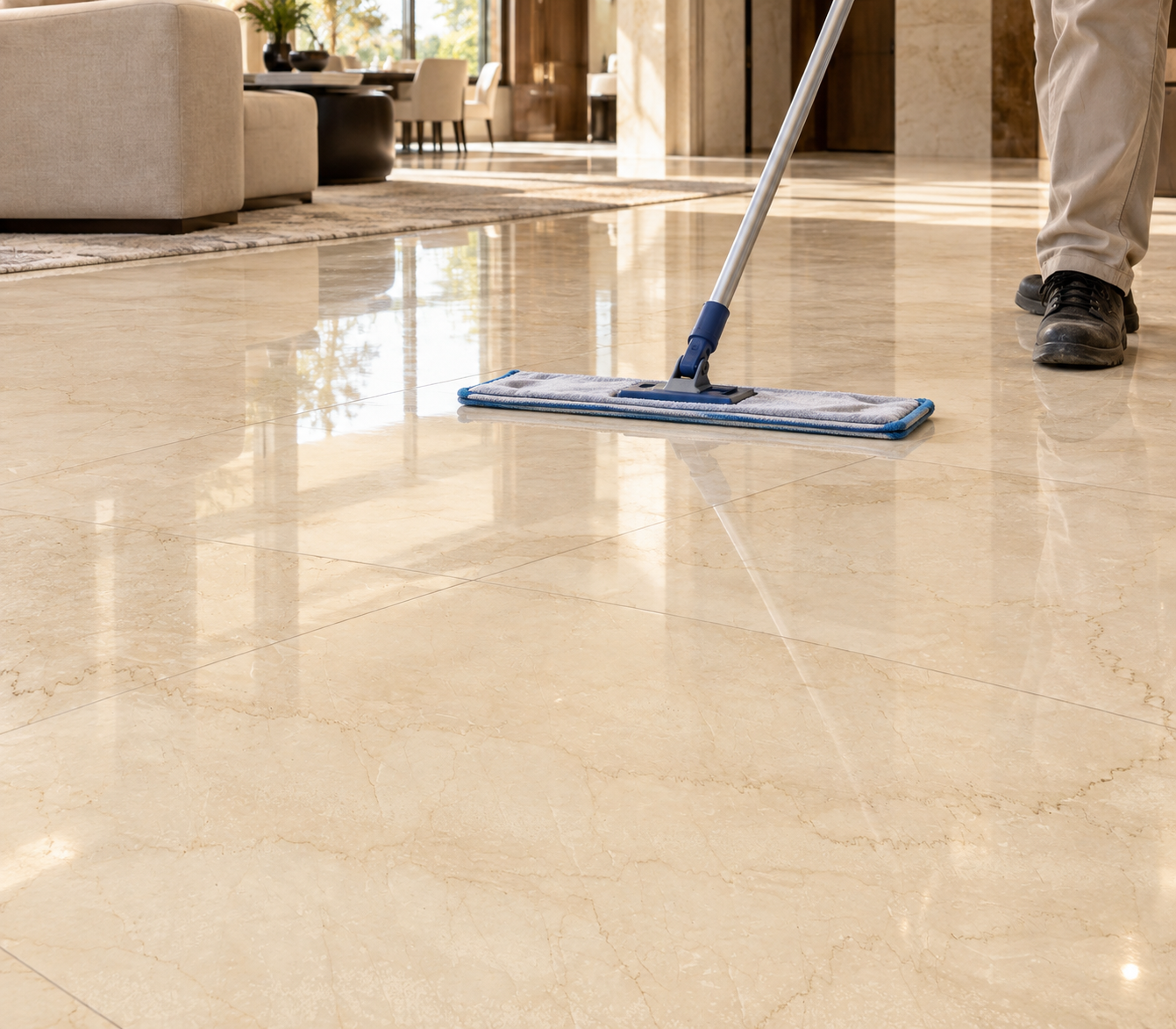
The golden rule: marble prefers gentle maintenance over aggressive cleaning. Remove dust regularly, use a suitable mild product when required, wipe spills quickly and avoid harsh chemicals that can affect the polish.
Quick answer
A safe normal cleaning routine.
- Remove loose dust. Use a microfiber dust mop, soft broom or floor-safe vacuum head.
- Use clean water or a suitable neutral cleaner. Choose a product approved for natural stone rather than any generic floor cleaner.
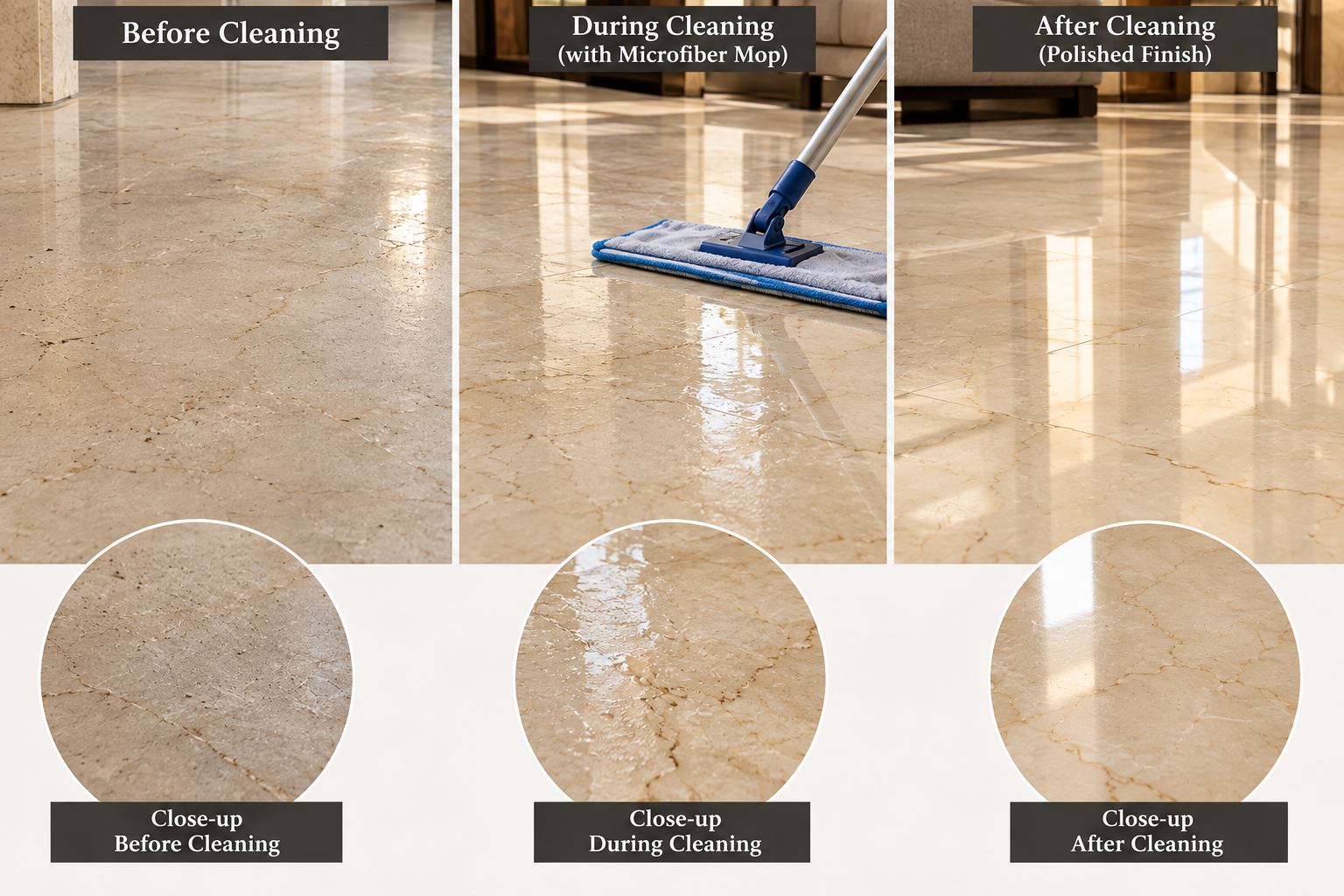
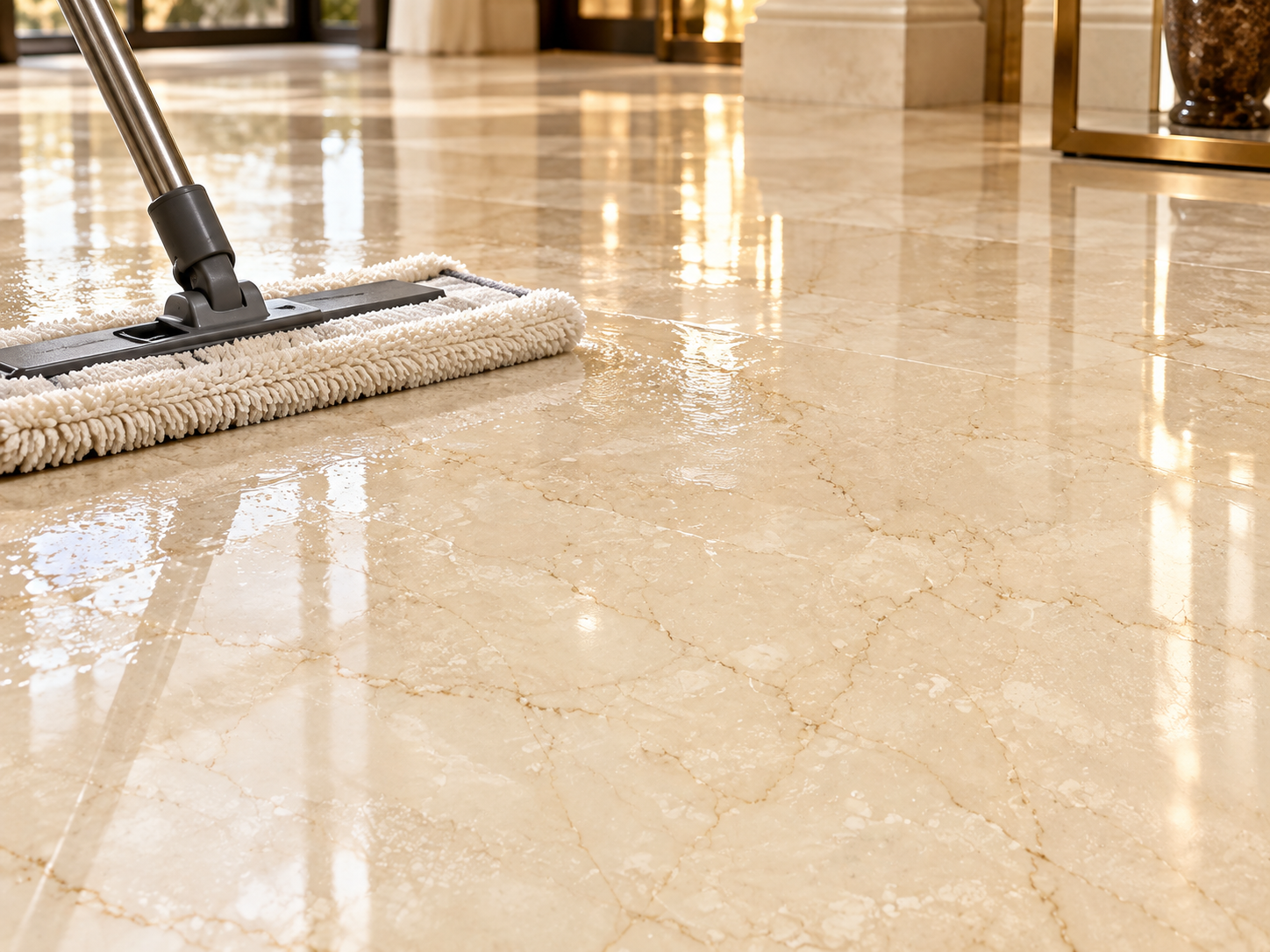
- Use a soft microfiber mop. It traps fine dust while using less water and placing less stress on the finish.
- Avoid over-wetting. A damp mop is normally better than flooding the floor or leaving standing water.
- Dry where needed. Buff lightly with a clean dry microfiber cloth if streaks or water marks remain.
- Blot spills promptly. Early action is usually easier than trying to remove a set stain later.
What makes Italian marble different from tile?
Italian marble is a natural calcium-based stone. Its surface can react with acids, which is why a product that appears harmless on ceramic or porcelain may be unsuitable for polished marble. Vinegar, lemon juice, acidic bathroom cleaners and some descaling products can affect the surface and create etching.
The objective is not to constantly deep-clean marble. It is to prevent unnecessary surface damage in the first place.
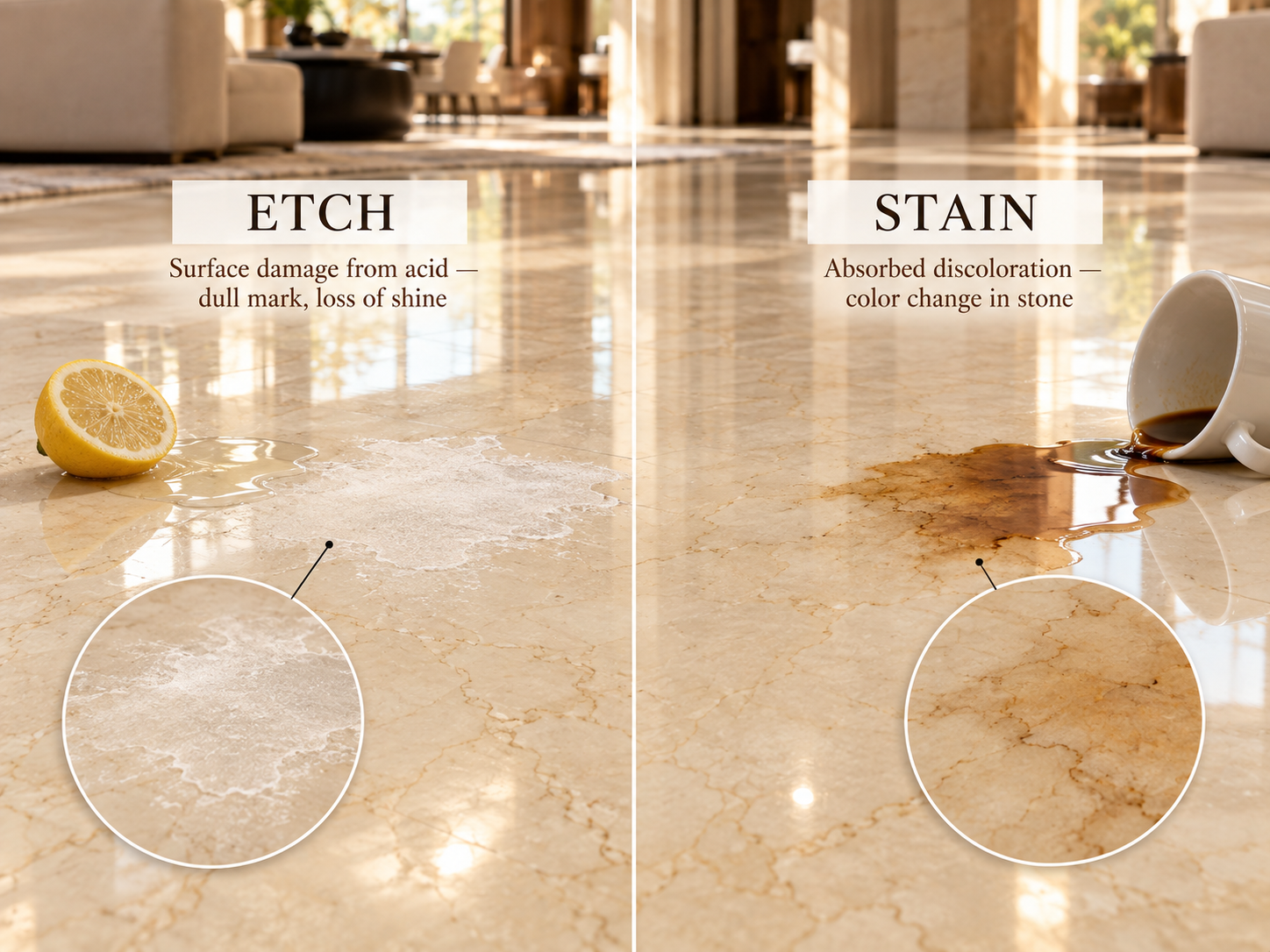
What is etching?
Etching is not the same as a stain. An acidic substance reacts with the marble surface, leaving a dull, whitish, lighter or less reflective patch that may feel slightly different from the surrounding polish. Cleaning harder usually does not solve etching because the polish itself may need professional restoration.
The best daily and weekly cleaning routine.
Fine sand and grit can act like abrasives under shoes. Over time, repeated movement can reduce surface clarity. Regular dust removal is therefore one of the most valuable maintenance steps, especially at entrances and in high-traffic corridors.
| Frequency | Recommended action |
|---|---|
| Daily or as needed | Remove dust and grit before they are walked across the polish |
| After spills | Blot and clean promptly without spreading the liquid |
| Weekly | Damp mop with clean water or a suitable mild stone cleaner |
| Periodically | Inspect grout, joints and high-traffic areas |
| As required | Arrange professional polishing or restoration where cleaning cannot restore the finish |
There is no need to mechanically polish marble every week. Good maintenance is mostly preventative.
Products to avoid on polished marble.
Do not use a stronger chemical simply because the floor looks difficult to clean. The wrong product can create a dull patch that is harder to correct than the original dirt.
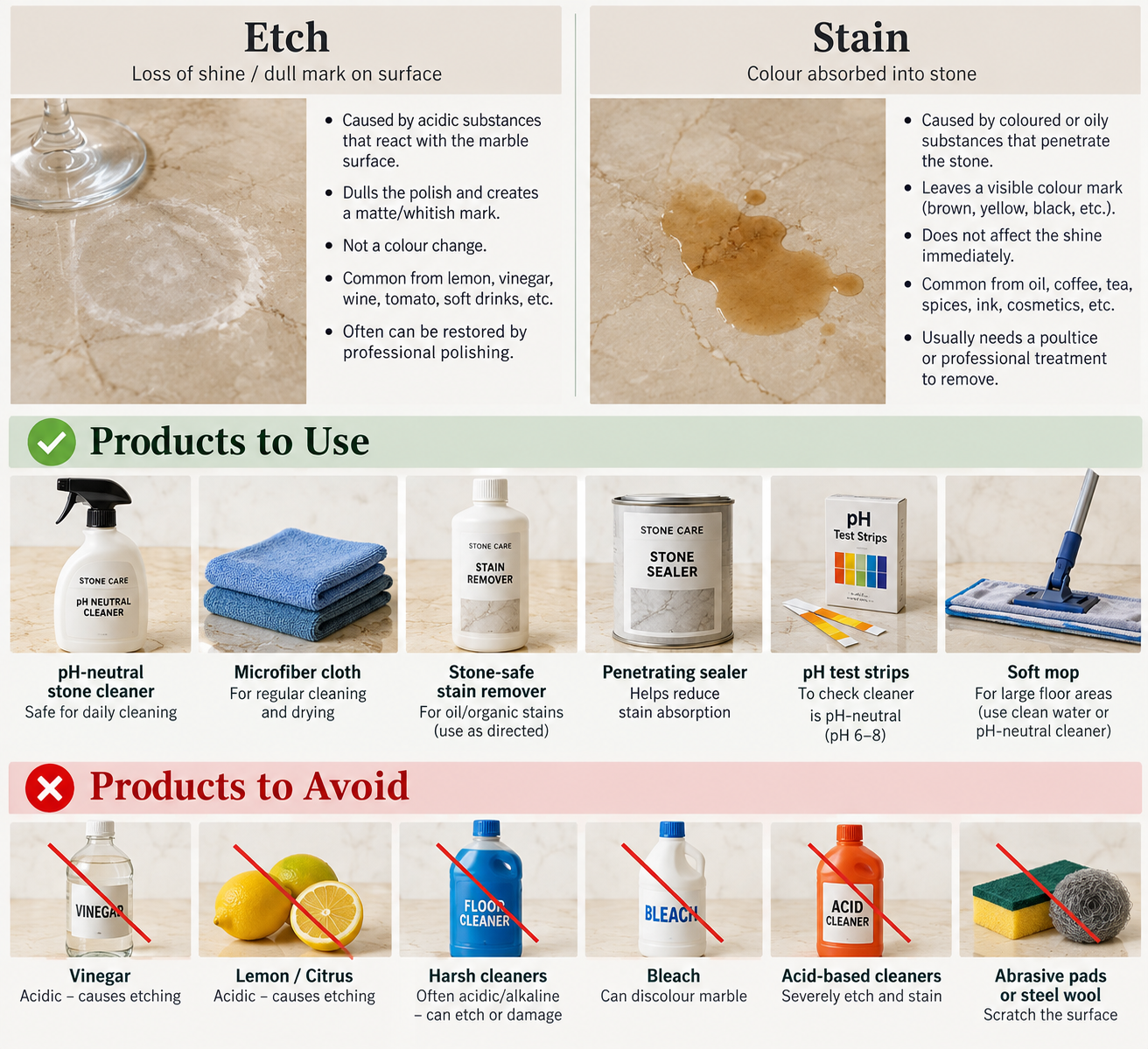
Use
- Microfiber cloth or soft mop
- Clean water
- pH-neutral natural-stone cleaner
- Stone-safe stain treatment as directed
Avoid
- Vinegar and lemon-based cleaners
- Strong bathroom descalers
- Harsh bleach mixtures used casually
- Abrasive powders, steel wool and rough pads
Can you use regular floor cleaner?
Sometimes, but the label “floor cleaner” is not enough. Check pH, manufacturer instructions, suitability for calcium-based natural stone, residue and acidic ingredients. If unsure, test on a small inconspicuous area or select a product specifically designed for natural stone.
What should you do when something spills?
Blot, do not spread. Use a clean absorbent cloth, then clean with a suitable marble-safe method. Rubbing a spill across a wider area can make the problem harder to identify and treat.
| Spill | Immediate action | Why it matters |
|---|---|---|
| Water | Wipe dry if marks remain | Reduces water marks and residue |
| Tea or coffee | Blot quickly and clean gently | Organic colour can penetrate porous stone |
| Juice or lemon | Remove immediately | Acid creates an etching risk |
| Wine | Blot without spreading | Reduces the affected area |
| Oil | Absorb quickly and assess | Oil can penetrate and create a dark mark |
| Mud | Allow loose material to lift before gentle cleaning | Avoids abrasive rubbing |
Stain versus etch
A stain is something that has penetrated and changed the colour of the stone, such as oil, coffee or organic pigment. An etch is a surface reaction that removes shine, such as lemon, vinegar or acidic cleaner. A stain may need extraction or a poultice; an etch may need refinishing. They are different problems.
Minor marks may respond to gentle cleaning, but persistent stains should be assessed before applying chemicals. A poultice is an absorbent treatment used in some stone-care procedures; it is not a universal home remedy, and the formulation depends on the stain, stone and depth of penetration.
Should Italian marble be sealed?
Some installations may benefit from an appropriate penetrating sealer depending on porosity, finish, application, traffic and exposure to staining substances. A sealer generally gives more time to clean certain spills; it does not make marble completely stain-proof and does not prevent acid etching.
A sealer may help with
- Liquid penetration
- Certain stains
- Maintenance response time
A sealer does not guarantee
- Protection from lemon or vinegar
- A scratch-proof surface
- Zero maintenance
- Permanent stain immunity
There is no universal sealing timetable. Assess the stone, finish, sealer type, traffic and cleaning method rather than resealing automatically after a fixed number of months.
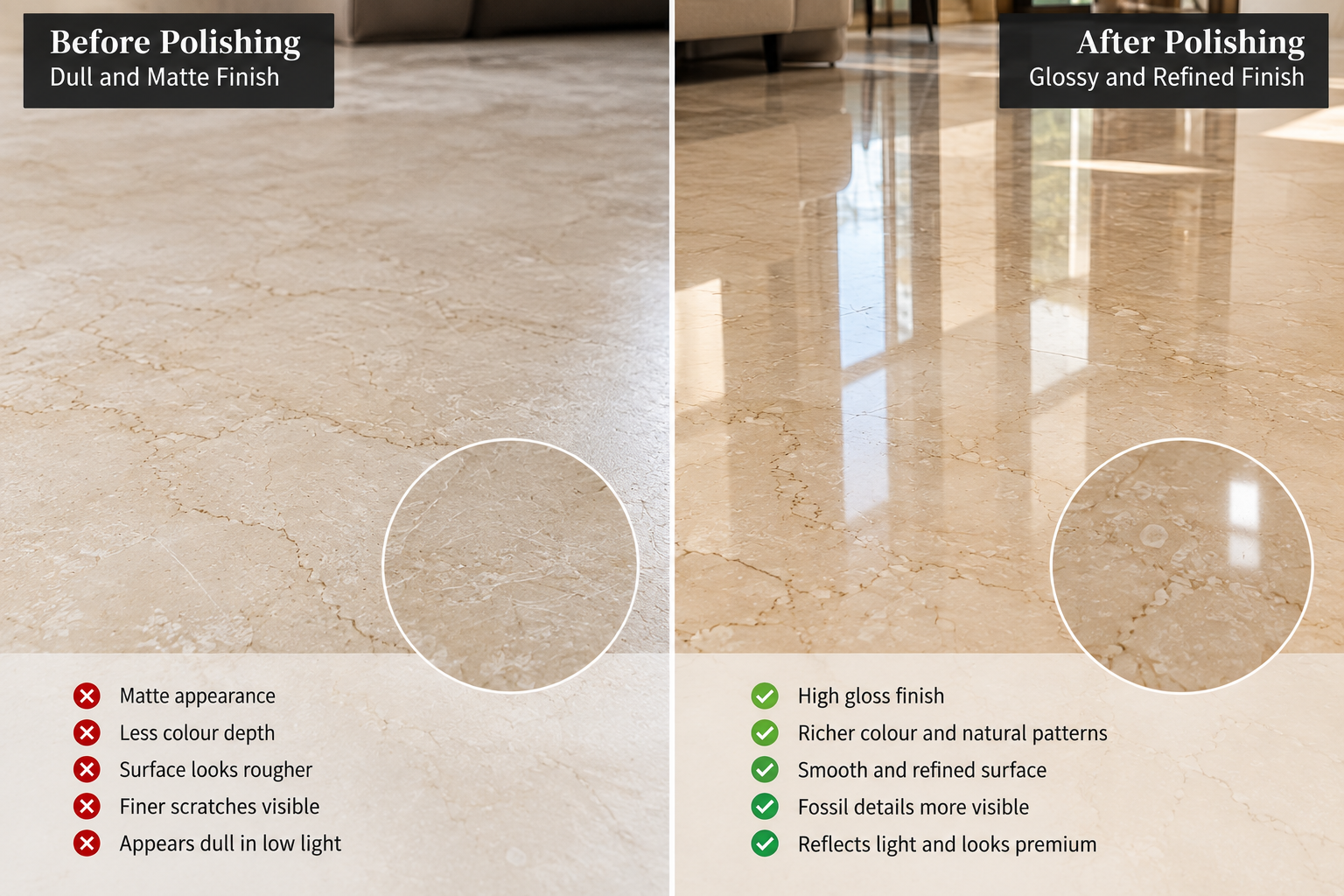
Why marble loses its shine.
Fine abrasion, sand and grit, unsuitable cleaners, acidic spills, residue build-up, heavy foot traffic and uneven maintenance can make a polished floor appear less reflective. This does not automatically mean the marble has failed. In many cases, the surface finish can be professionally restored.
| Process | Purpose |
|---|---|
| Cleaning | Removes surface dirt and residue |
| Deep cleaning | Addresses more difficult contamination |
| Polishing | Restores or enhances surface finish |
| Honing | Refines the surface with controlled abrasives |
| Restoration | Corrects more substantial surface damage |
Marble care by room and application.
High-traffic entrances
Use a good entrance mat to capture grit before it reaches the marble, and clean the mat regularly so it does not trap abrasive dirt. Use felt or suitable protectors under furniture legs and lift rather than drag heavy pieces.
Dining areas and kitchens
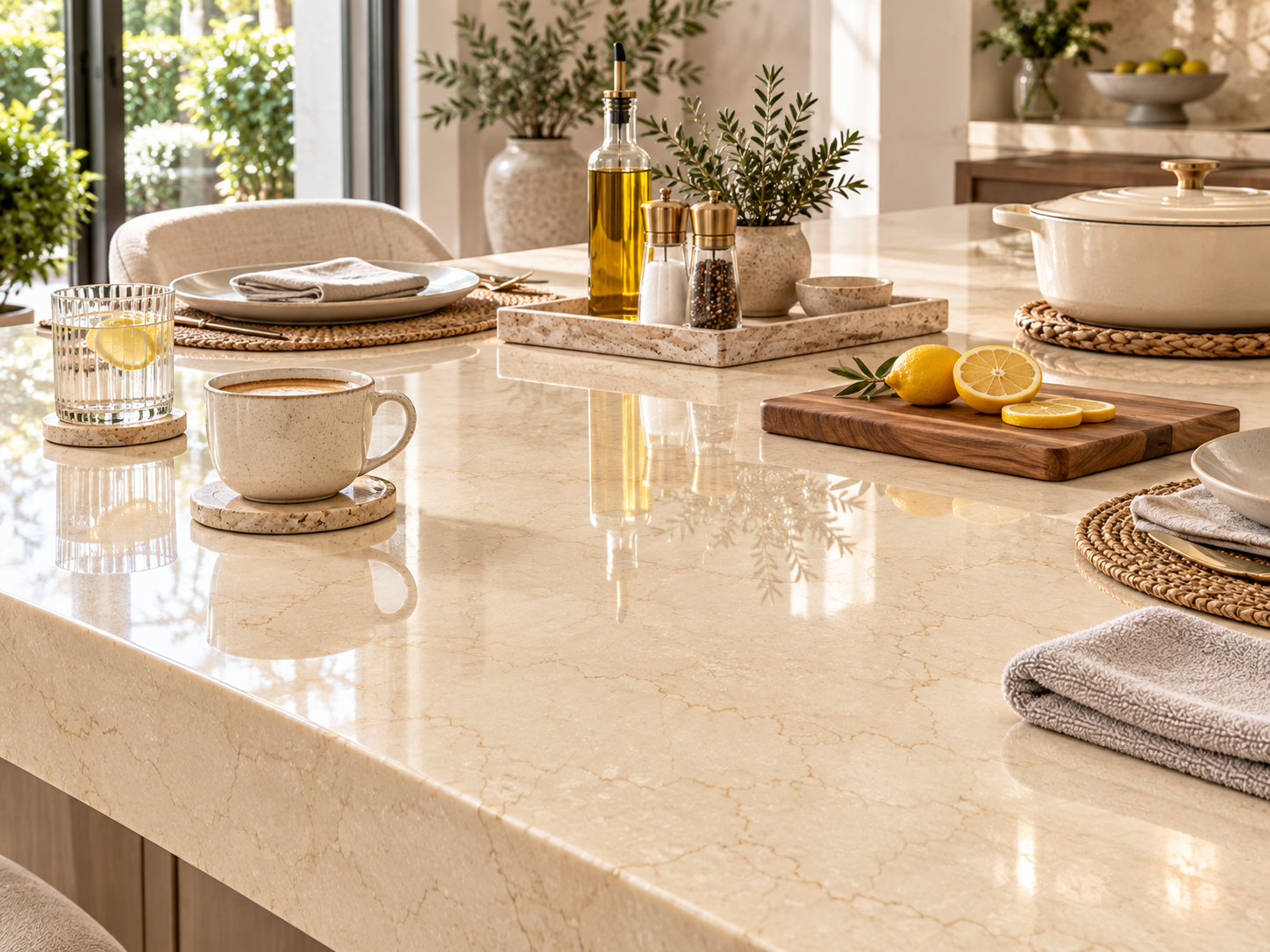
Marble is exposed to oil, wine, sauces, citrus, food pigments and coffee. Use coasters, placemats and chopping boards, and wipe acidic spills quickly. The supplied Sunlit Marble Island Dining Scene and kitchen visual can help customers understand prevention in a real setting.
Staircases
Stairs experience concentrated traffic. Focus on grit removal, edge cleanliness, non-abrasive cleaning and checking whether high-use tread areas are becoming dull. Do not use aggressive scrubbers simply because stairs accumulate more dirt.
Bathrooms
A bathroom cleaner is not automatically marble-safe. Avoid acid-based limescale removers unless specifically approved for natural marble, and pay attention to soap residue, ventilation, grout and standing moisture.
Should you use a steam mop?
This depends on the equipment, installation, sealer and manufacturer guidance. Heat and moisture conditions vary, so a steam cleaner should not automatically be assumed safe for every installation. A soft microfiber mop and suitable neutral cleaner remain the simpler default.
Can you use baking soda?
Do not treat baking soda as a universal marble cleaner. Its abrasiveness and method of use can affect a polished finish. Use products and methods specifically suitable for natural stone instead of experimenting on visible surfaces.
The Fratelli Singh 4S marble care routine.
SWEEP + SOFT CLEAN + SPILL FAST + SURFACE CHECK = BETTER LONG-TERM MARBLE CARE
Sweep
Remove grit and dust before it is walked across the polish.
Soft clean
Use stone-safe neutral cleaning with a soft mop.
Spill fast
Blot spills promptly, especially acidic and oily liquids.
Surface check
Inspect polish and wear periodically before a small issue grows.
Seven common marble-cleaning mistakes.
- Using vinegar because it is “natural”. Acid is still acid.
- Scrubbing harder when a dull mark remains. It may be etching, not dirt.
- Using too much cleaner. Residue can leave a floor streaky or cloudy.
- Ignoring grit. Fine particles gradually abrade the polish.
- Waiting too long after a spill. Early cleaning is usually easier.
- Assuming sealed marble cannot stain. Sealers reduce risk; they do not remove it.
- Trying internet remedies without identifying the problem. Stain, etch and scratch need different solutions.
Save this routine
Interactive marble care checklist.
Why good marble care starts before installation.
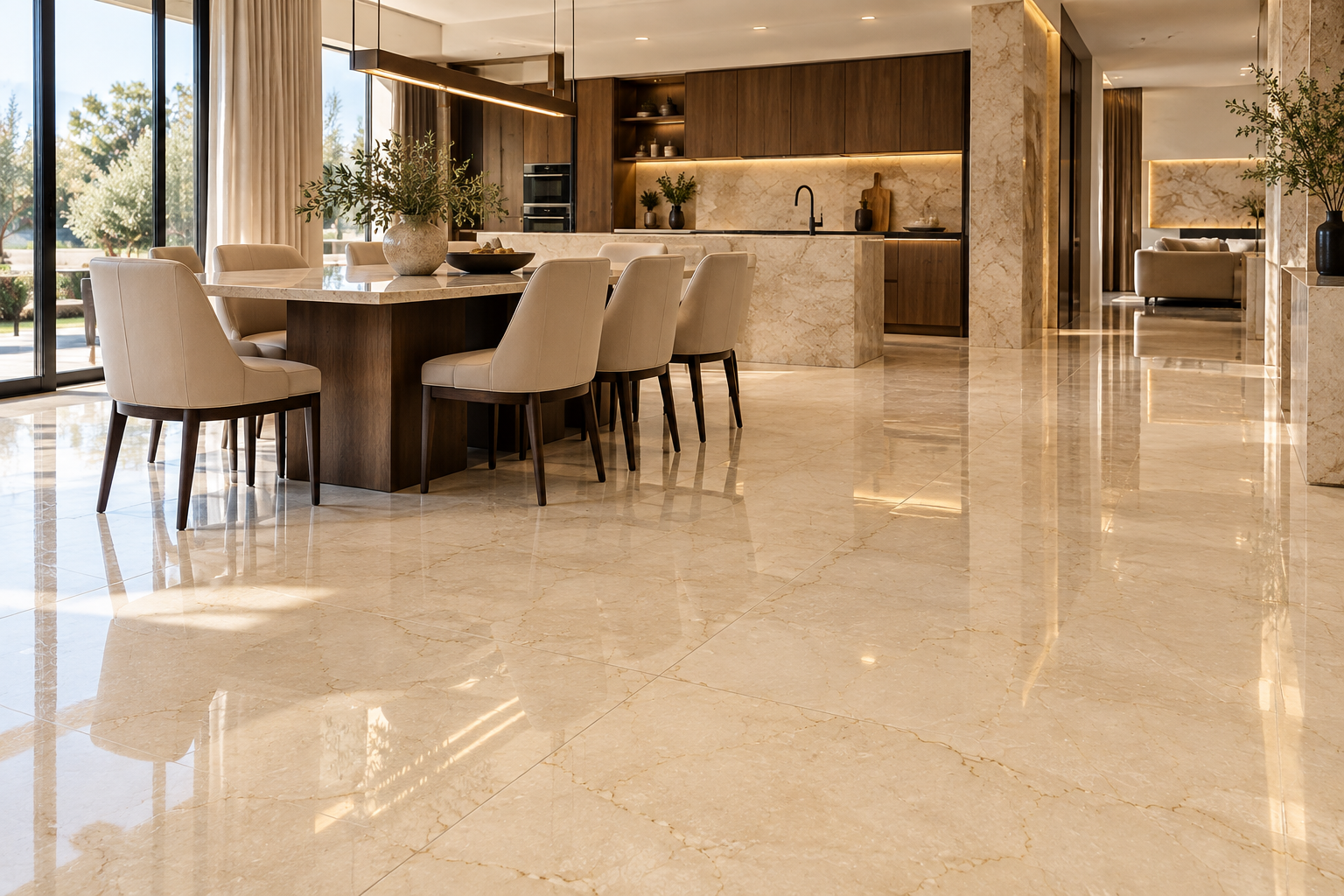
Maintenance begins during material selection. Understand the stone characteristics, intended finish, application, expected traffic and maintenance expectations before approving the slab. The ideal surface for a formal living room may not be the same as the ideal surface for an extremely high-traffic commercial entrance.
Clear answers
Frequently asked questions.
What is the safest way to clean Italian marble?
Remove dust first and use clean water or a suitable pH-neutral natural-stone cleaner with a soft microfiber mop or cloth. Blot spills promptly and avoid acidic or abrasive products.
Can I clean marble with vinegar?
No. Vinegar is acidic and can etch polished marble, leaving a dull or cloudy mark.
Can I use lemon to clean marble?
No. Lemon and citrus-based cleaners are acidic and can damage a polished marble surface.
What is the best cleaner for Italian marble?
Use a product specifically suitable for natural marble, ideally a pH-neutral stone cleaner, and follow the manufacturer’s instructions.
Why does my marble look dull after cleaning?
Possible causes include cleaner residue, abrasive wear or etching. If normal cleaning does not restore the surface, the issue may be with the polish rather than dirt.
Can marble stains be removed?
Many stains can be treated, but the correct method depends on the stain type and how deeply it has penetrated. Persistent stains should be assessed before using chemicals.
Does sealing prevent marble stains?
A suitable penetrating sealer can reduce absorption and provide more time to clean spills, but it does not make marble completely stain-proof.
Does sealing stop lemon or vinegar from damaging marble?
No. Sealing generally does not prevent acid etching.
Can I use a scrubber on Italian marble?
Avoid aggressive abrasive pads and brushes on polished marble. Use soft cleaning materials unless a stone-care professional recommends otherwise.
How do I clean Botticino marble?
Use regular dust removal, a marble-safe neutral cleaner when required, prompt spill cleanup and no acidic or abrasive chemicals.
Can polished Italian marble be restored after becoming dull?
In many cases, professional honing, polishing or restoration may improve the surface depending on the cause and extent of damage.
Need advice for a real marble surface?
Share the marble variety, application, finish and issue you are seeing. The Fratelli Singh team can help you identify the right next question before you use a chemical or arrange restoration.
Request assistance ↗